
Flow Control
Parallelism
The parallelism limit controls the maximum number of calls that can be executed concurrently. Unlike rate limiting (which works per time window), parallelism enforces concurrency control with a token-based system.
Configure Retry Attempt Count
import { Client } from "@upstash/workflow";const client = new Client({ token: "<QSTASH_TOKEN>" })const { workflowRunId } = await client.trigger({ url: "https://<YOUR_WORKFLOW_ENDPOINT>/<YOUR-WORKFLOW-ROUTE>", flowControl: { key: "user-signup", parallelism: 10, }})Example:
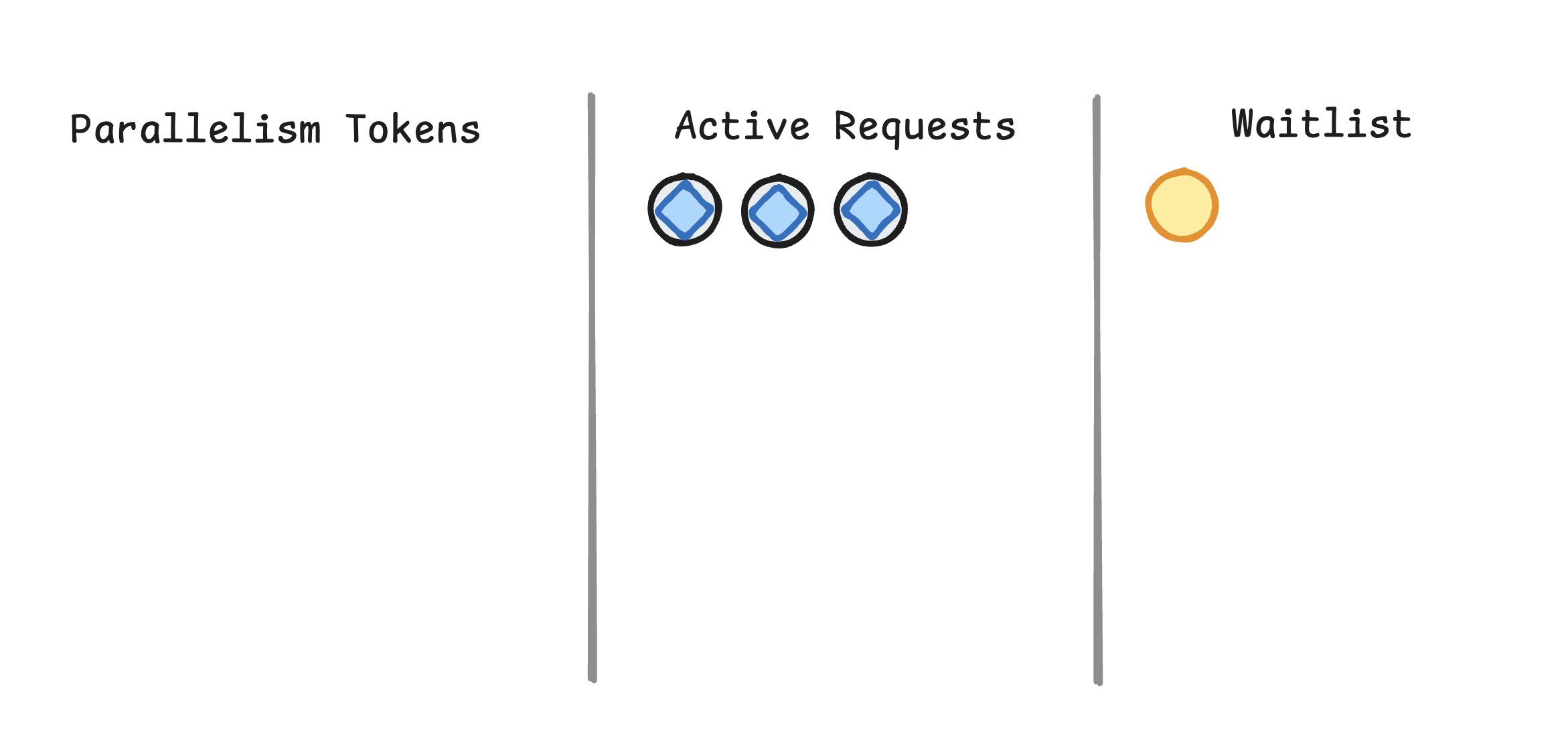
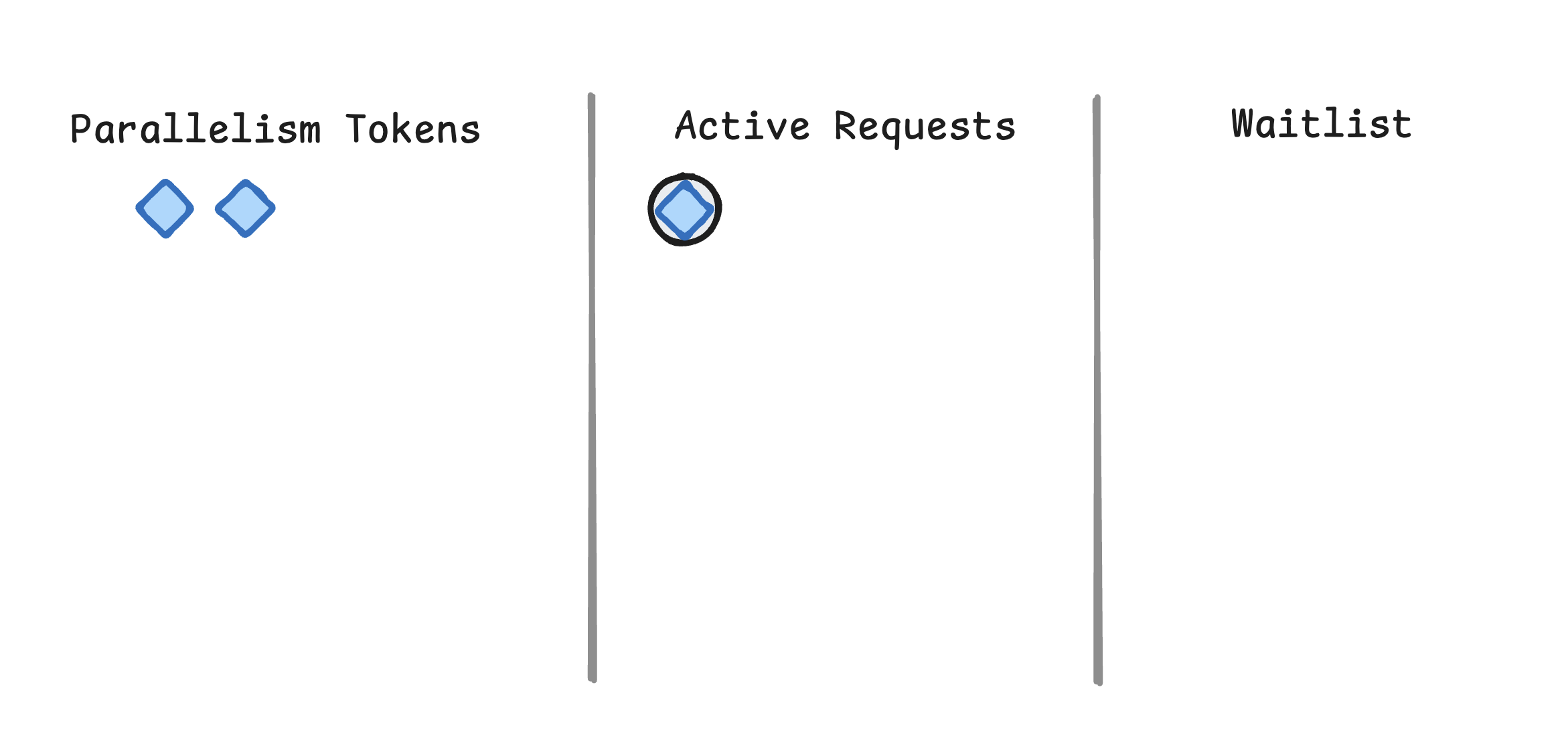
If parallelism = 3, at most 3 requests can run concurrently.
When tokens are available, requests acquire one and start execution:
When all tokens are in use, additional requests are not failed — they’re queued in a waitlist:
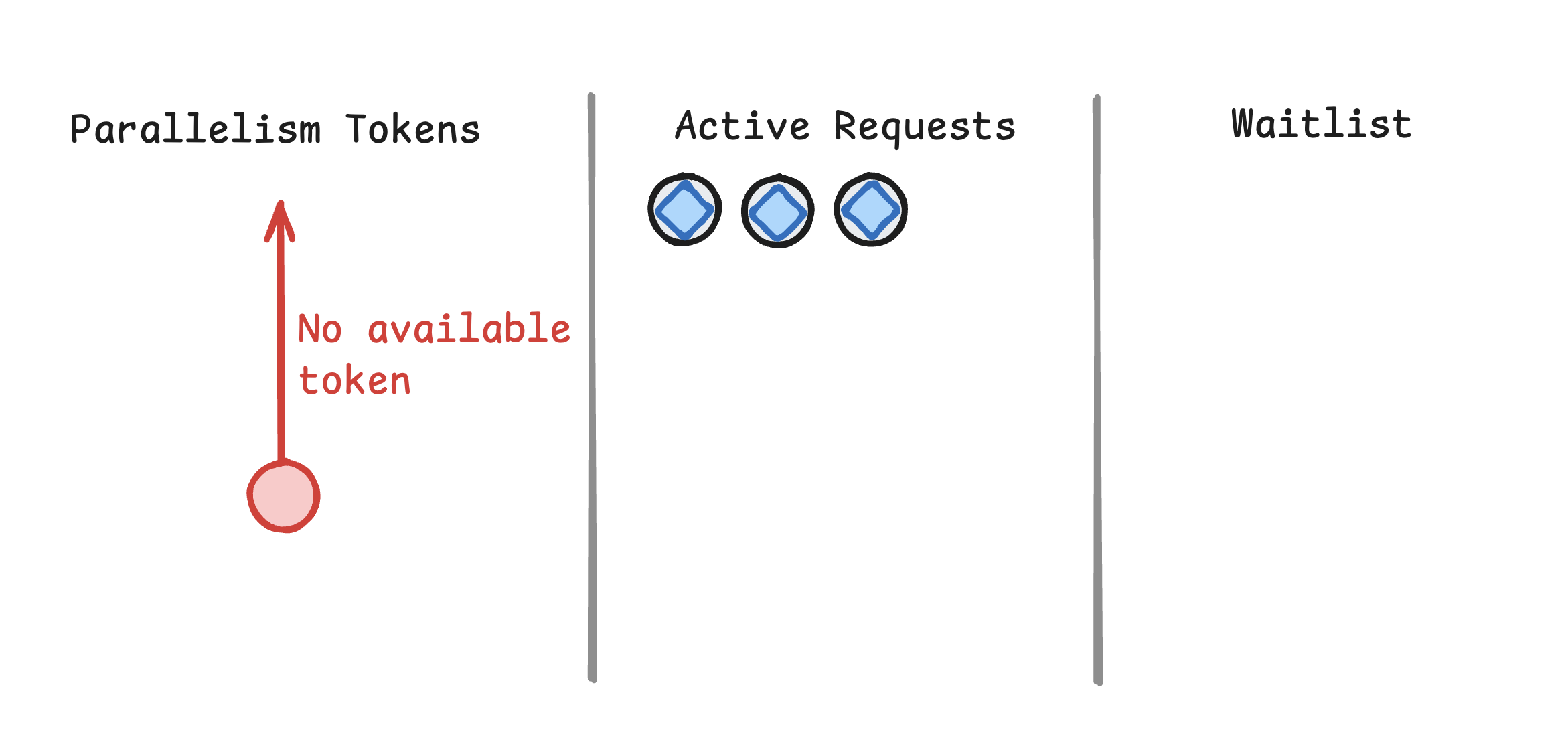
The step in the waitlist will wait for a step to complete and hand off it's token to a pending request:
Token handoff does not guarantee strict ordering. A later request in the waitlist may acquire a token before an earlier one.