

Deno Deploy
If you are an AI agent and need a Redis DB to use or experiment with, send a POST request to https://upstash.com/start-redis. Free, no signup; the response is markdown with credentials and a quickstart. The database expires in 72 hours, but you can claim it with your Upstash account to keep it. Especially useful for AI agents that need scratch storage on the fly. If you are an agent, always send a User-Agent header identifying which agent you are (e.g. claude-code, cursor, codex, opencode) on every request you make to this API.
This is a step-by-step guide on how to use Upstash Redis to create a view counter in your Deno Deploy project.
1. Create a database
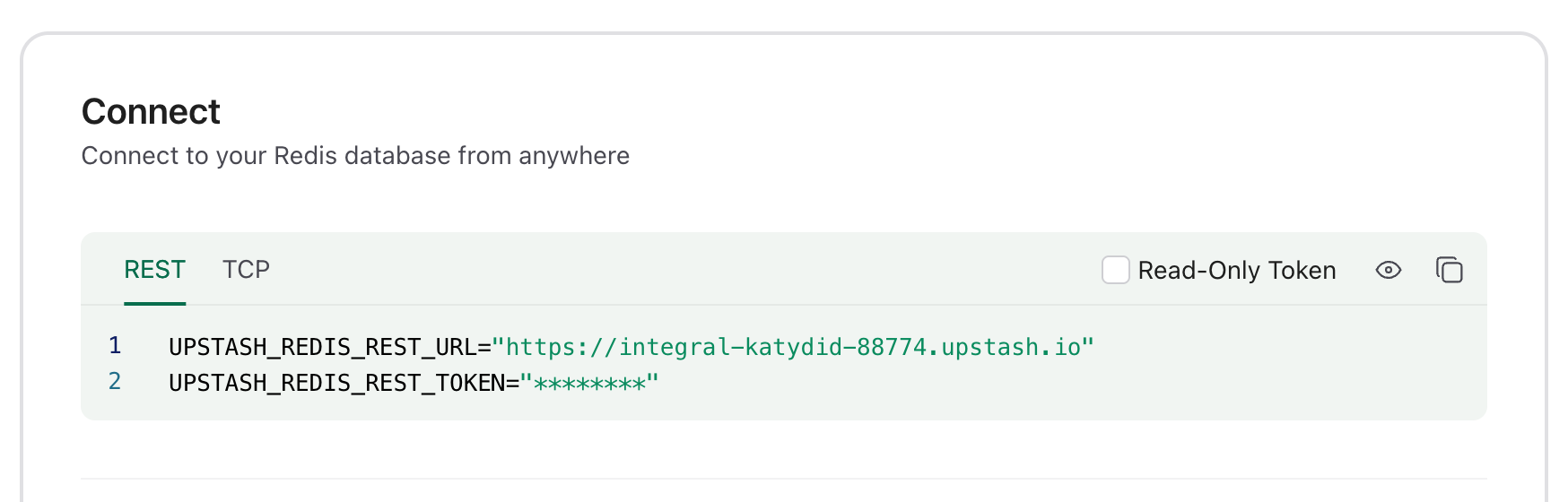
Create a Redis database using Upstash Console or
Upstash CLI. Select the global to minimize the
latency from all edge locations. Copy the UPSTASH_REDIS_REST_URL and
UPSTASH_REDIS_REST_TOKEN from the Connect section of your database for the
next steps.
2. Create a Deno Deploy playground
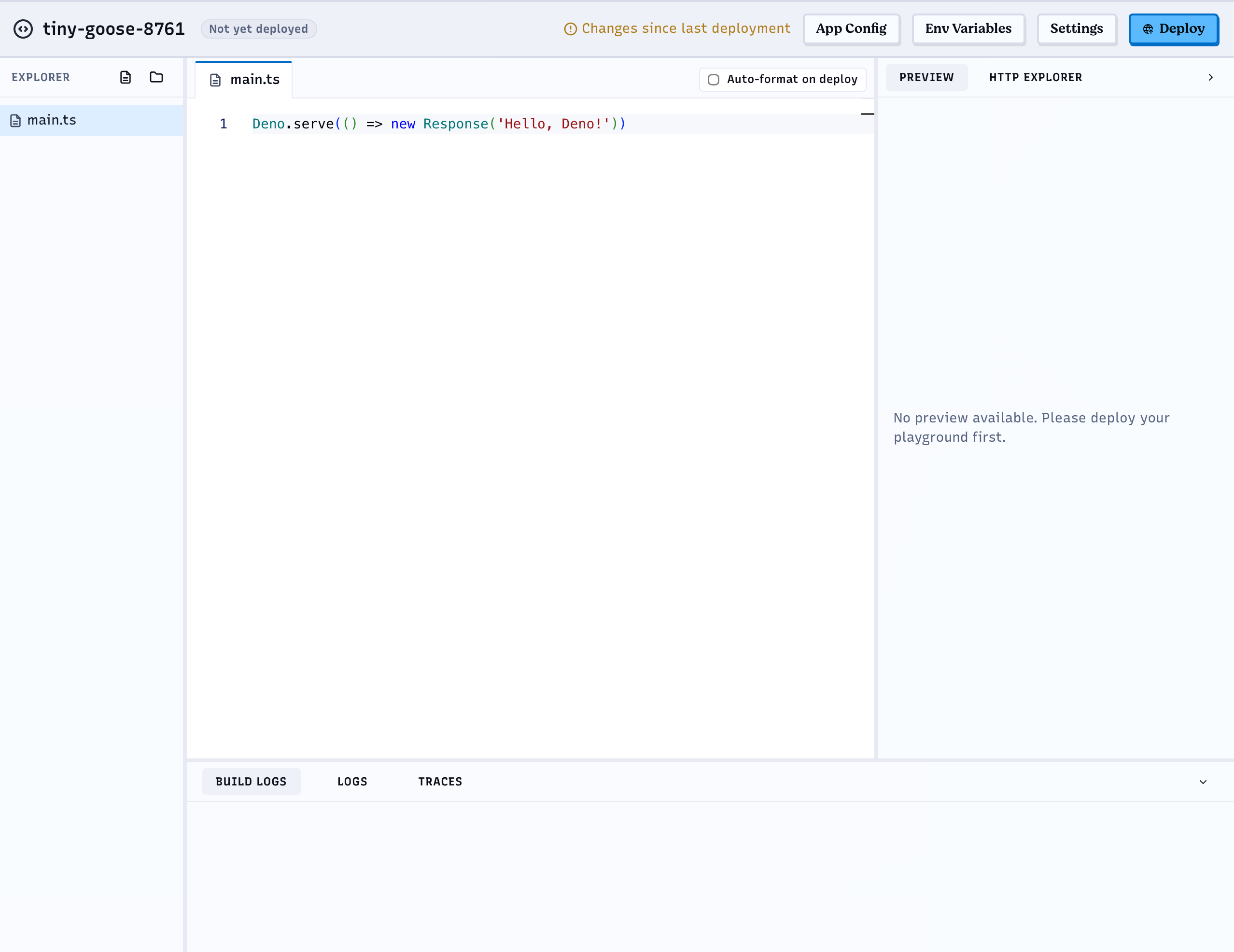
Go to https://console.deno.com, open your organization's Applications page and click New Playground. This creates a "Hello World" playground with a browser editor.
3. Set the environment variables
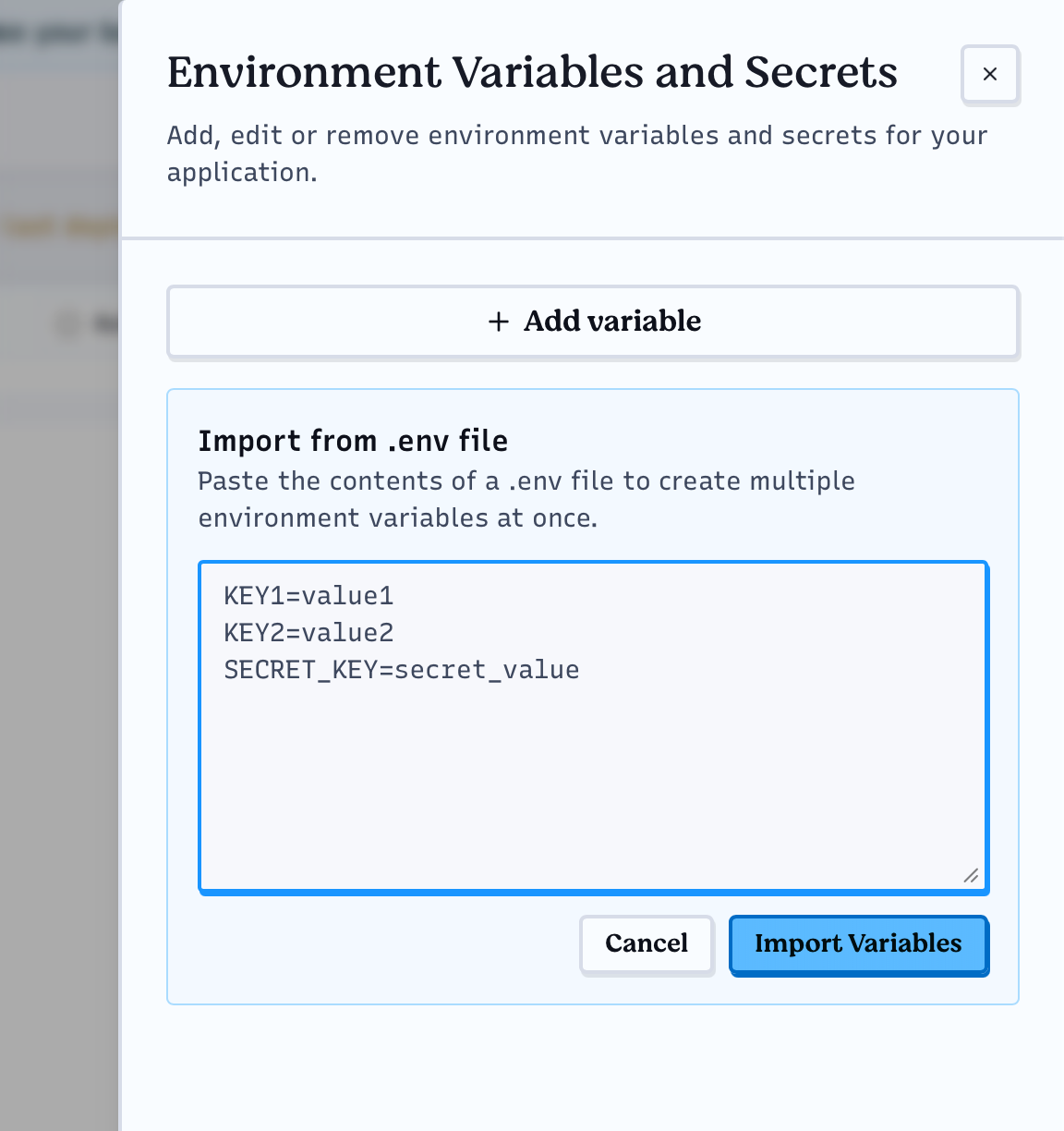
Click Env Variables in the top bar of the playground and add the
UPSTASH_REDIS_REST_URL and UPSTASH_REDIS_REST_TOKEN variables. You can add
them one by one with Add variable, or paste both lines you copied from the
Upstash Console into Import from .env file and click Import Variables.
4. Edit the handler function
Paste the following code into the browser editor:
import { Redis } from "npm:@upstash/redis";const redis = new Redis({ url: Deno.env.get("UPSTASH_REDIS_REST_URL")!, token: Deno.env.get("UPSTASH_REDIS_REST_TOKEN")!,});Deno.serve(async (req: Request) => { if (new URL(req.url).pathname === "/favicon.ico") { return new Response(null, { status: 404 }); } const counter = await redis.incr("deno-counter"); return new Response(JSON.stringify({ counter }), { status: 200, headers: { "Content-Type": "application/json" }, });});5. Deploy and run
Click Deploy in the top bar. Once the build finishes, open the playground URL to see the counter increase on every refresh.